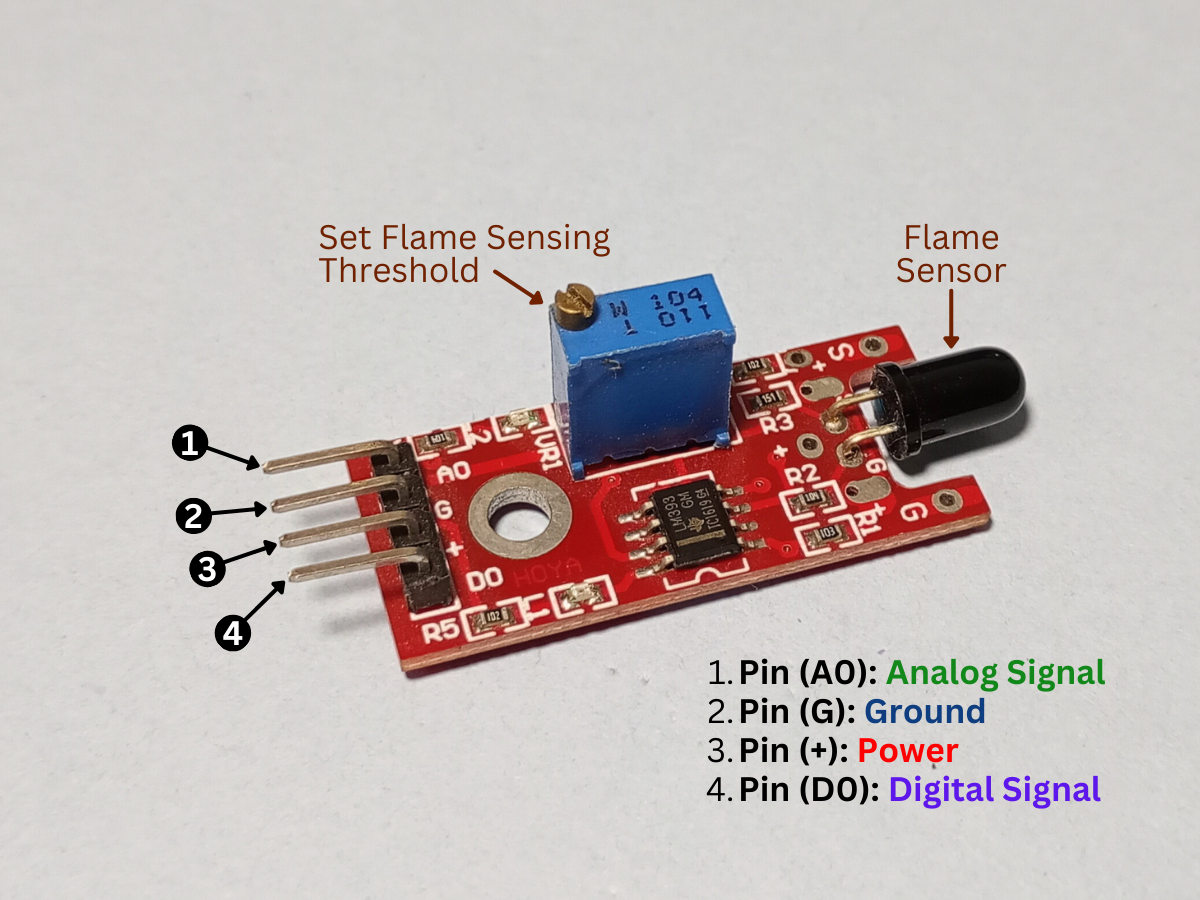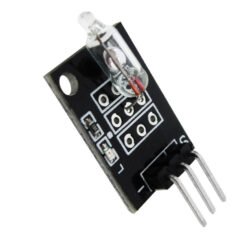
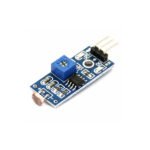

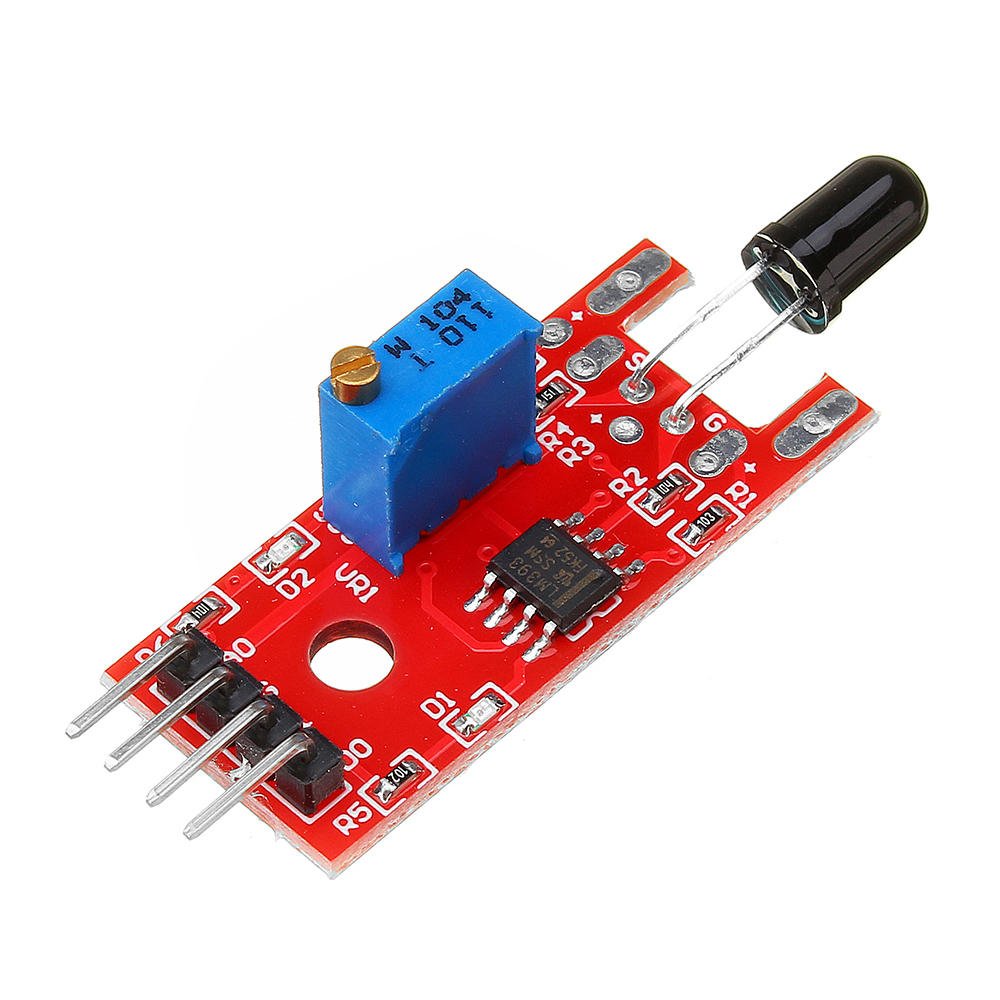
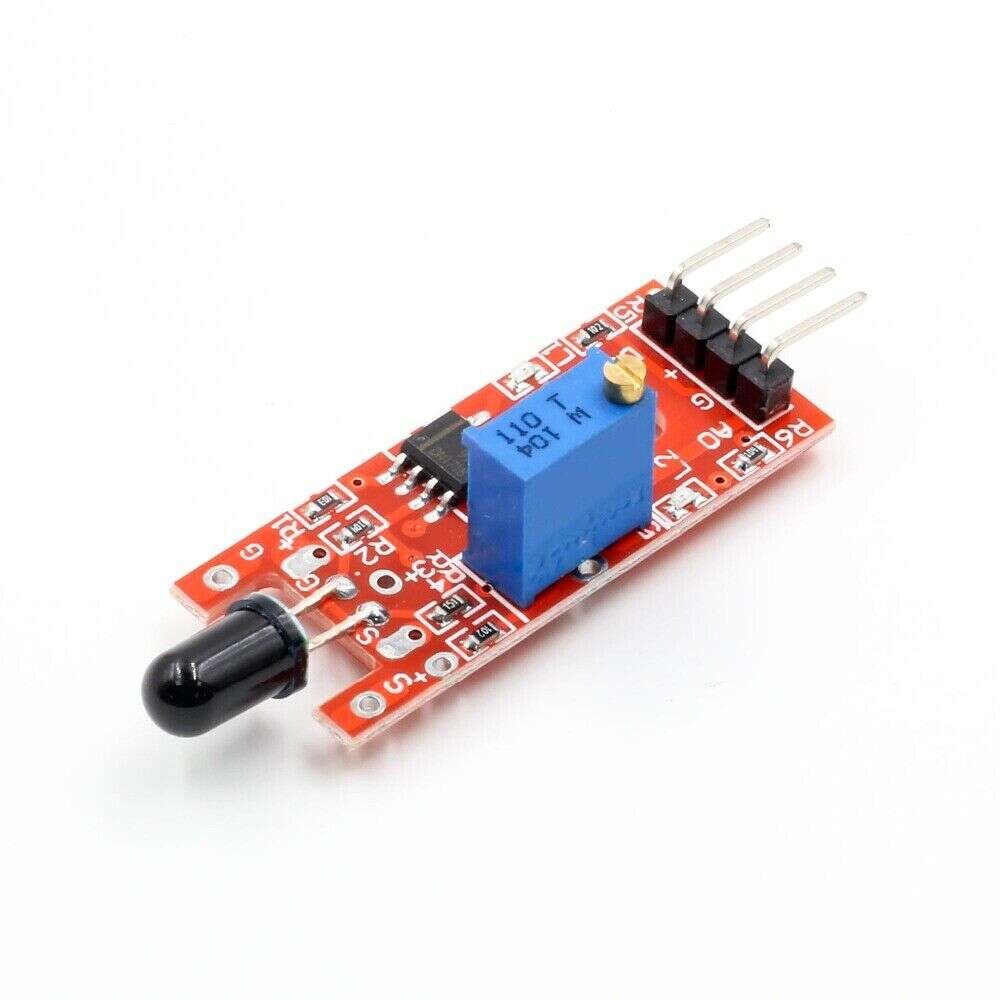
The Flame Sensor Module (4-Pin) is a reliable, cost-effective, and highly sensitive device designed for detecting infrared light emitted by fire or flames. It is widely used in fire detection systems, safety monitoring equipment, and automation projects that require flame recognition. Using a photodiode sensitive to wavelengths in the 760 nm to 1100 nm range, it can detect flame sources such as candles, lighters, or even sunlight reflections under certain conditions. Its 4-pin interface provides both digital and analog outputs, offering flexibility for various applications.
How It Works
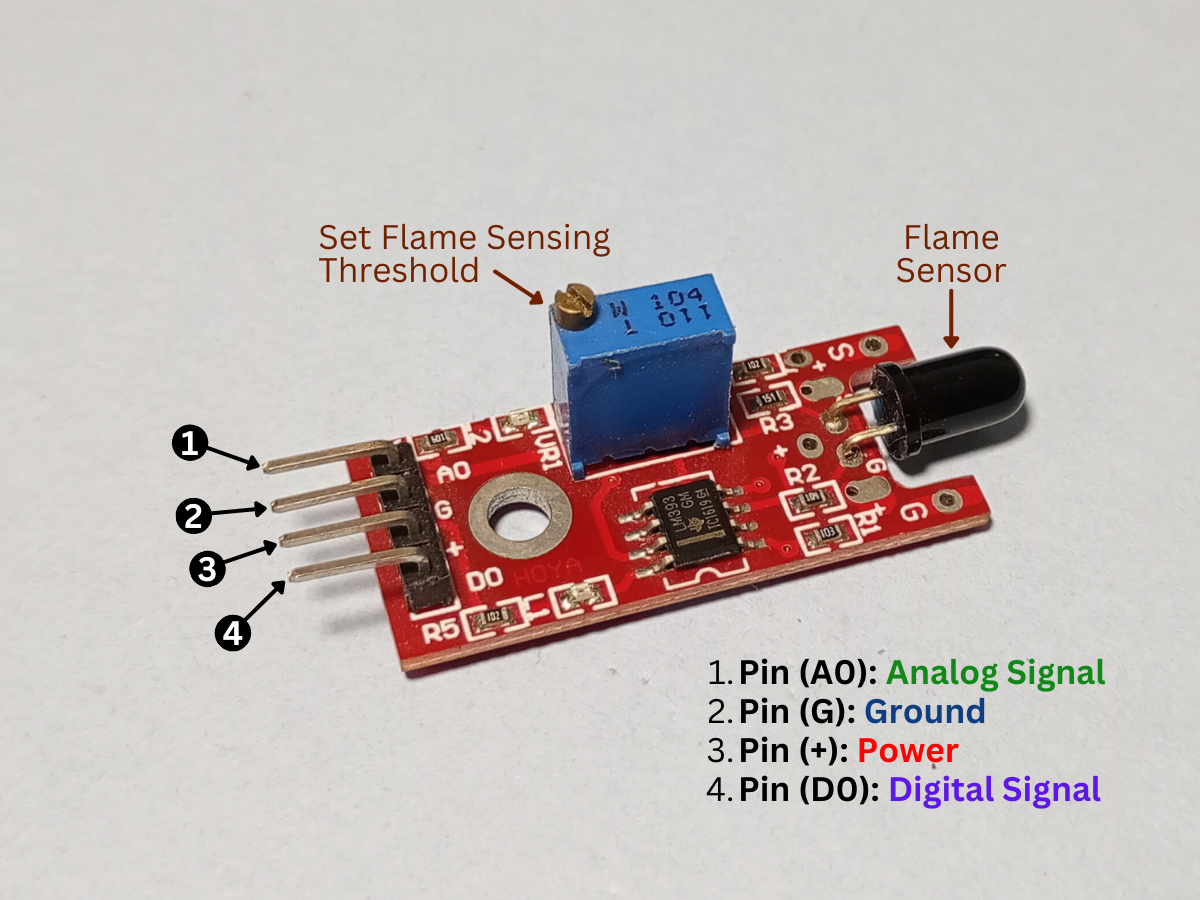
This module operates by sensing the infrared light spectrum generated by flames. when a flame is detected The onboard photodiode picks up IR signals, and the integrated LM393 comparator processes the signal to produce a digital output. The analog output can be used for more precise readings or for calibrating sensitivity levels. The onboard potentiometer allows you to adjust the detection threshold according to environmental conditions, reducing false alarms.
Key Features
High sensitivity to flame and infrared light.
Dual output modes: digital (DO) and analog (AO).
Adjustable sensitivity via onboard potentiometer.
Wide operating voltage range: 3.3V–5V DC.
Compact PCB for easy integration into systems.
Fast response time for quick flame detection.
Specifications
| Parameter | Value |
|---|---|
| Operating Voltage | 3.3V – 5V DC |
| Detection Range | Up to ~80 cm (line of sight) |
| Wavelength Sensitivity | 760 nm – 1100 nm |
| Output Types | Digital (DO), Analog (AO) – |
| Response Time | < 15 ms |
| Operating Temperature | –25°C to +85°C |
| Board Size | ~32 mm × 14 mm |
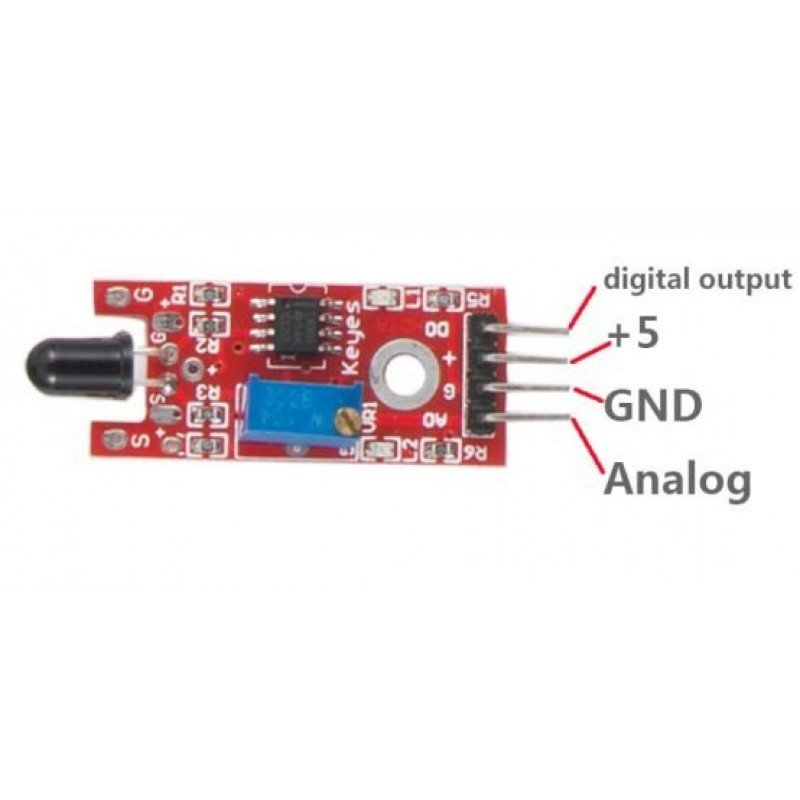
Pin Configuration
| Pin | Name | Description |
|---|---|---|
| 1 | VCC | Power supply input (3.3V–5V DC) |
| 2 | GND | Ground reference |
| 3 | DO | Digital output (HIGH when flame detected) |
| 4 | AO | Analog output (proportional to IR intensity) |
Applications
Fire and flame detection systems.
Home and industrial safety alarms.
Gas leakage and fire monitoring devices.
Smart robots with hazard detection.
Educational and prototype projects.