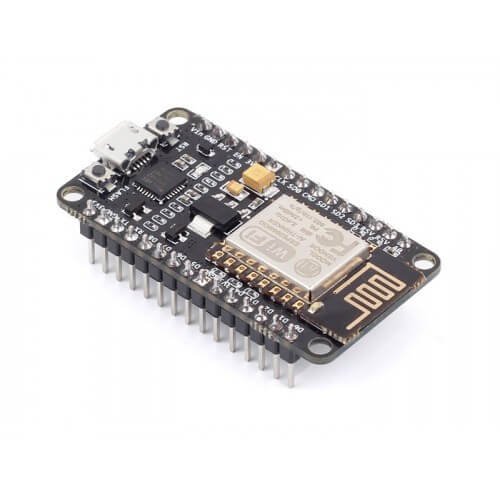
ESP8266 NodeMCU WiFi Programming Development Kit 30-Pin With CP2102
The ESP8266 NodeMCU 30-Pin Dev Kit with CP2102 delivers a powerful and flexible development platform for IoT projects. It uses the ESP-12E/F module built around the ESP8266 chip. The board includes a CP2102 USB-to-UART interface. You plug in via USB to flash firmware, power the board, or debug.
It runs at 80 MHz clock speed and offers built-in WiFi (802.11 b/g/n). It supports SPI, I²C, UART, PWM, and has ADC input. The dev board includes two rows of 15 pins each (30 pins total), giving you access to many GPIOs. It has a voltage regulator so you can supply through VIN (often ~5V) or through USB; the board provides 3.3V to the module and external devices.
Key Features
ESP8266 (ESP-12E or ESP-12F) built-in WiFi module
CP2102 USB-to-Serial onboard for flashing and communication
30 pins (dual rows) provide many GPIOs for sensors and modules
Supports ADC, PWM,‘ I²C, SPI, UART
Runs on 3.3V logic with onboard regulator
Reset (RST) and Enable (EN) pins included
Works with Arduino IDE / Lua / MicroPython firmware
Product Specifications
| Specification | Details |
|---|---|
| MCU & Core | ESP8266EX (via ESP-12E/F module) |
| CPU Clock Speed | 80 MHz |
| Flash Memory | Typically 4 MB |
| RAM (for programs) | ~64 KB (varies) |
| USB-Serial Interface | CP2102 chip |
| Operating Voltage | 3.3V (regulated) |
| Input Voltage (VIN/USB) | ~5V via USB or VIN pin |
| Number of GPIOs | ~16 usable GPIO pins |
| ADC Input | 1 channel, 0-3.3V |
| Interfaces | UART, I²C, SPI, PWM |
| LEDs | Power + some boards include onboard LED(s) |
| Reset / Enable pins | Yes |
| Dimensions | ~49 mm x 26 mm (may vary slightly) |
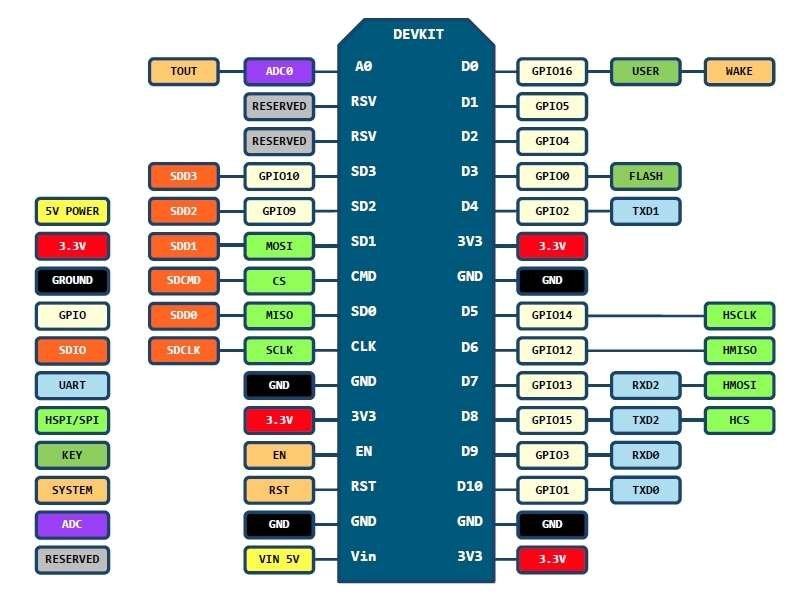
Pin Configuration
Here is a typical pin layout (names may slightly vary by board version):
| Pin Label | Function |
|---|---|
| VIN | Supply input when using external voltage (~5V) |
| 3V3 | Outputs regulated 3.3V |
| GND | Ground |
| EN | Enable pin (active HIGH) |
| RST | Reset |
| TX / RX | UART serial communication (used for programming and debug) |
| D0-D8, GPIO pins | General purpose I/O, support PWM, I2C, SPI as needed |
| A0 (ADC) | Analog input (0-3.3V) |
Applications
IoT sensor nodes (temperature, humidity, light etc.)
Home automation (light control, smart plugs, etc.)
Wireless data logging over WiFi
Web servers and REST API endpoints
Remote control and monitoring systems
Prototyping WiFi enabled products